

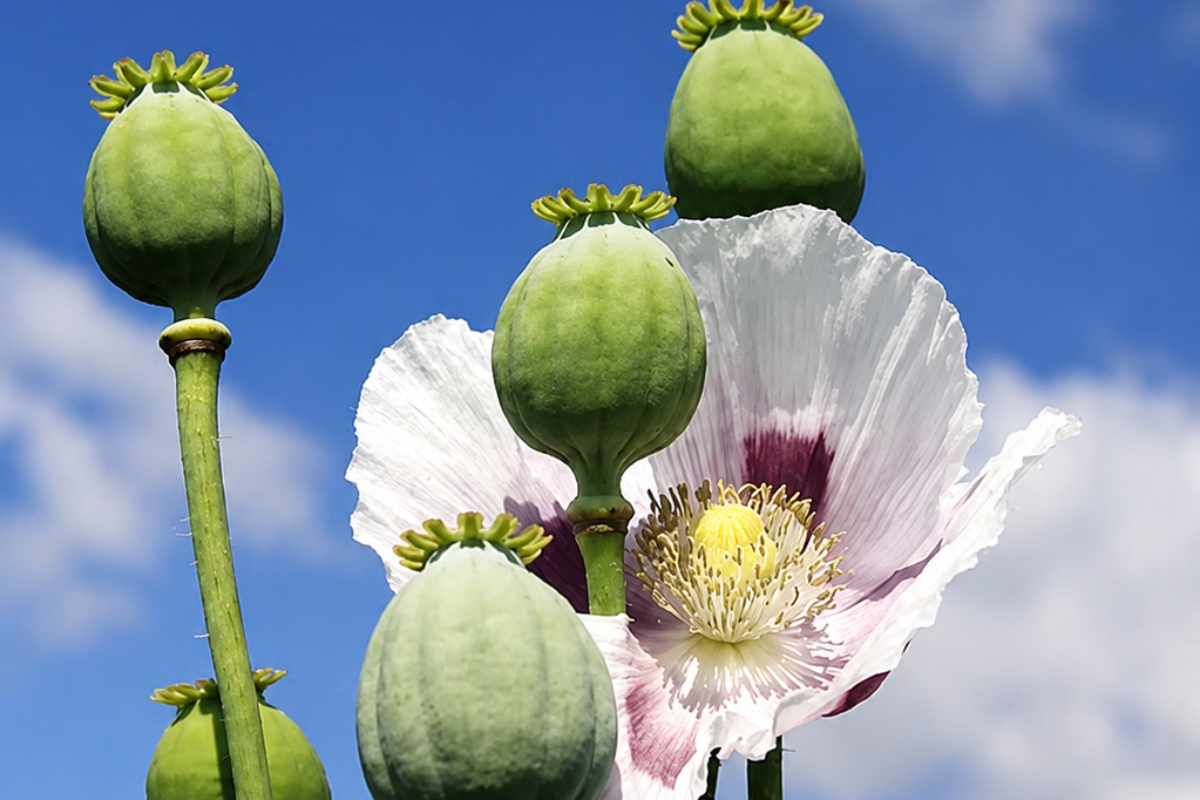
Opium poppy seeds show up in kitchens far more often than most people realize. They sit inside bagels, muffins, and curry pastes in grocery stores worldwide, yet many shoppers know little about where they come from or how they differ from the plant’s other parts. This guide clears up the confusion and explains what these seeds are actually used for.
You’ll learn how these seeds fit into everyday cooking, what nutrients they offer, and why some countries regulate them differently than others. By the end, you’ll understand exactly what you’re buying the next time you see them on a spice rack.
What Are Opium Poppy Seeds?
Opium poppy seeds come from Papaver somniferum, the same plant that produces opium latex. The seeds themselves grow inside the plant’s dried seed pod, and harvesters collect them long after the plant has finished flowering. At this stage, the seeds contain no meaningful amount of the alkaloids found in the plant’s sap.
This distinction matters because people often confuse the seeds with the drug-producing parts of the plant. Opium comes from a milky latex that farmers extract from unripe seed pods through scoring and collection. The seeds develop later and serve an entirely different purpose in food and agriculture.
Trace Alkaloid Content and Why It Matters
Poppy seeds can pick up small amounts of natural alkaloids like morphine and codeine from the plant’s surface during harvesting. This trace contamination varies by growing region, seed variety, and processing method. Washing and cleaning seeds before packaging reduces this residue significantly.
This is also why food safety agencies recommend moderate consumption. Eating a large quantity of unwashed poppy seeds in one sitting has, in rare cases, caused a positive result on a drug test. Reputable commercial suppliers typically wash and test their seeds to keep alkaloid levels low and within food safety limits.
Culinary Uses of Opium Poppy Seeds
Cooks around the world have used opium poppy seeds for centuries, and their nutty, slightly sweet flavor works well in both sweet and savory dishes. These tiny seeds add texture, visual appeal, and a distinct taste that few other ingredients can match.
Here are some of the most common culinary applications:
- Baking: Poppy seeds are a classic addition to bagels, muffins, cakes, and bread, often sprinkled on top for crunch or mixed into batter for flavor.
- Fillings: Ground poppy seeds form the base of traditional Eastern European pastries, including poppy seed rolls and strudels.
- Curries and gravies: In Indian and Bangladeshi cooking, ground poppy seeds thicken curries and add a rich, nutty depth to dishes like posto.
- Salad dressings: Poppy seed dressing, often combined with honey and mustard, is a popular topping for fruit and green salads.
- Garnishes: Whole seeds add visual contrast and light crunch when sprinkled over roasted vegetables or flatbreads.
Different cuisines treat these seeds differently. Central European baking traditions grind them into thick, sweet fillings, while South Asian cooking usually grinds them into a paste for savory dishes. Both approaches highlight how versatile this small seed really is.
Nutritional Value of Poppy Seeds
Poppy seeds pack a surprising amount of nutrition into a small serving. A single tablespoon contains healthy fats, plant protein, fiber, and several important minerals.
These seeds provide the following key nutrients:
- Calcium: Poppy seeds contain notably high calcium levels for a seed, supporting bone health.
- Healthy fats: They offer polyunsaturated fats, including linoleic acid, which supports heart health as part of a balanced diet.
- Fiber: A good fiber content supports digestion and helps maintain steady blood sugar levels.
- Minerals: Poppy seeds also supply manganese, magnesium, phosphorus, and zinc in meaningful amounts.
Because these seeds are calorie-dense, moderation matters. A small sprinkle adds flavor and nutrients without significantly affecting your daily calorie intake, making them a practical addition rather than a primary food source.
Legal Status and Buying Considerations
The legal status of opium poppy seeds varies by country, and this often confuses first-time buyers. In the United States and most of Europe, washed and processed poppy seeds are legal and widely sold in grocery stores. Growing the live Papaver somniferum plant, however, faces stricter regulation in several countries because of its connection to opium production.
Some countries restrict poppy seed imports more tightly, and a few regulate seed potency or require specific washing standards before sale. If you’re traveling internationally or shopping from an unfamiliar supplier, it helps to check local regulations first, since rules can change and vary by region.
When buying poppy seeds for cooking, look for products from established food brands that follow standard washing and testing procedures. Store them in an airtight container in a cool, dark place, since their natural oils can turn rancid faster than many other seeds. Refrigeration extends shelf life considerably, especially in warm climates.
Conclusion
Opium poppy seeds serve a simple, practical role in kitchens worldwide, offering flavor, texture, and solid nutrition without any connection to the plant’s psychoactive latex. Understanding the difference between the seeds and the raw opium latex helps clear up common misconceptions about safety and legality. Whether you’re baking a batch of poppy seed muffins or thickening a traditional curry, these small seeds bring genuine culinary value to your cooking.
As with any food ingredient, moderation and proper sourcing matter. Buying from reputable suppliers and storing seeds correctly ensures you get the full flavor and nutritional benefit these seeds have to offer.